

In the last issue, I shared our producer Seth’s feedback on the clips I’d been making with AI:
“The clips lack complete thoughts.”
I defended the aggressive cuts because I wanted an open question and a reason to watch the full episode. But his feedback gave me a much more useful instruction for the next edit: deliver one complete thought, then leave the larger question open. Someone should get something useful even if they never click through.
That’s a better brief than “make it punchier.” It gives the agents something to preserve while they decide what to cut, and gives me something specific to look for when I watch the result.
This time, we took a 51-minute recording and asked the agents to assemble a connected story. The first cut came in just over four minutes. The published version is 3:50.
The conversation is about a problem Colin and I keep running into: an AI prototype can make its creator more productive while still depending on that person to keep it working. You correct the output, supply missing context, and steer around failures. Hand it to someone else, and the gaps you’ve been quietly filling become their problem.
That gave the edit a question to carry through the conversation: what stops working when the person correcting the AI steps away?
The agents selected and assembled the passages that carry that argument. They also executed the animations, color correction, sound design, and timed captions, then built a moving end scene from our footage. We produced three thumbnail packages we can A/B test, too. We haven’t run those tests yet.
In our tests, asking for an edit or another iteration can take a handful of minutes. We still direct the work, review what comes back, and make adjustments. There’s plenty of thinking and review around those minutes before a video is ready to publish.
Being able to ask for a change, watch it, and try another version makes more room for exploring the idea. Feedback from the story, the production, and the audience can feed into the next edit while the reasoning is still fresh.
You can judge the argument and the editing in less than four minutes. There’s a nice complication here, too: the video’s argument applies to the workflow making the video.
Sound has been a particularly useful place to discover that getting an agent to execute a decision is easier than knowing whether I chose well.
We’re working with music tempo, texture, and intensity, along with effects and silence. A build can move a passage forward; dropping the music can give a sentence room to land. The conversation still needs room to breathe, though, and an effect that catches your attention can also become something you wish would stop.
Colin gave me a pretty direct listening test: “the dripping sound in one short is annoying”.
I agree. I wanted to explore it as an auditory hook. His feedback gives the next version a concrete decision to revisit: whether to soften it or remove it, and whether the thought comes through better as a result.
The early audience numbers leave us with more work, too.
In the October 8 snapshot, the longer video had 141 views and 1.3 hours of watch time. YouTube attributed eight new subscribers to it, which I’m happy about. Average view duration was 36 seconds, though. The thumbnail had a 4.4% click-through rate from 227 impressions, giving us a starting point for testing the other packages rather than a winning thumbnail.
The matched Short looks different depending on which audience you’re measuring.
YouTube Shorts
On YouTube, it had roughly 410 views. Those viewers averaged 16 seconds on a 14-second Short; meanwhile, just 4.7% stayed to watch. Most people swiped away.
Shorts feed supplied 95.4% of views. Detailed retention was still processing.
TikTok

On TikTok, the same Short had 307 views, a 5.6-second average watch time, and 11.64% watched it all the way through. TikTok reported that most viewers stopped in the first second.
Average retention: 40%. For You supplied 96.6% of views.
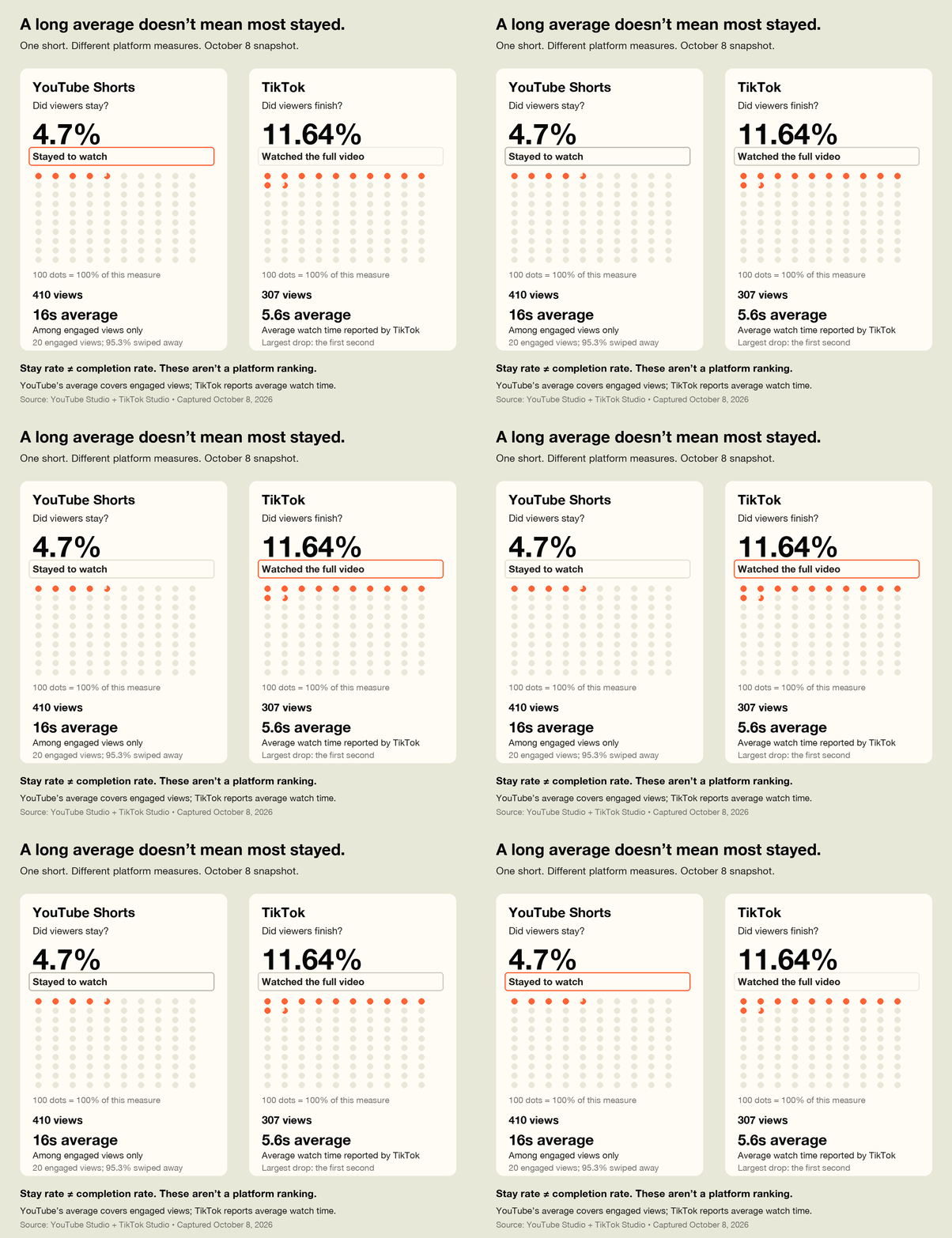
October 8 snapshot. Stay rate and full-video completion are different measures.
YouTube’s average among engaged viewers and TikTok’s average watch time don’t tell us which platform won. They do give us a reason to keep examining the opening. Seth’s feedback keeps the other half of the question in view: do the people who stay get a complete thought worth their time?
That’s where we are with the tool, too. We have a workflow producing videos we can publish and inspect, and it still requires manual tweaking. Our conversations give us useful material to test with, but they won’t expose every problem someone else’s footage will.
We’re turning this into a product and plan to release it soon. Before a broader release, I’d like to hear from people who want to try it with different kinds of videos. An interview, a tutorial, a product demo, or a recording you haven’t figured out what to do with yet could each ask something different of the editing workflow.
If you’re interested in being an early tester, reply and tell me what kind of footage or video you want to edit. That’s the most useful thing you can send me right now: what you’re working with, and what you’d like to make from it.
—Alan, Colin & the Torta Studios Team
P.S. If you’d like to follow the videos as we keep trying this, subscribe to Torta Studios on YouTube. We’ll have more edits to learn from.